Home › Guides › Changing table or a pad on a dresser?
Two ways to do it
Changing table or a pad on a dresser?
Both work. They fail differently, they cost different amounts of floor, and only one of them is still furniture when the diapers stop.
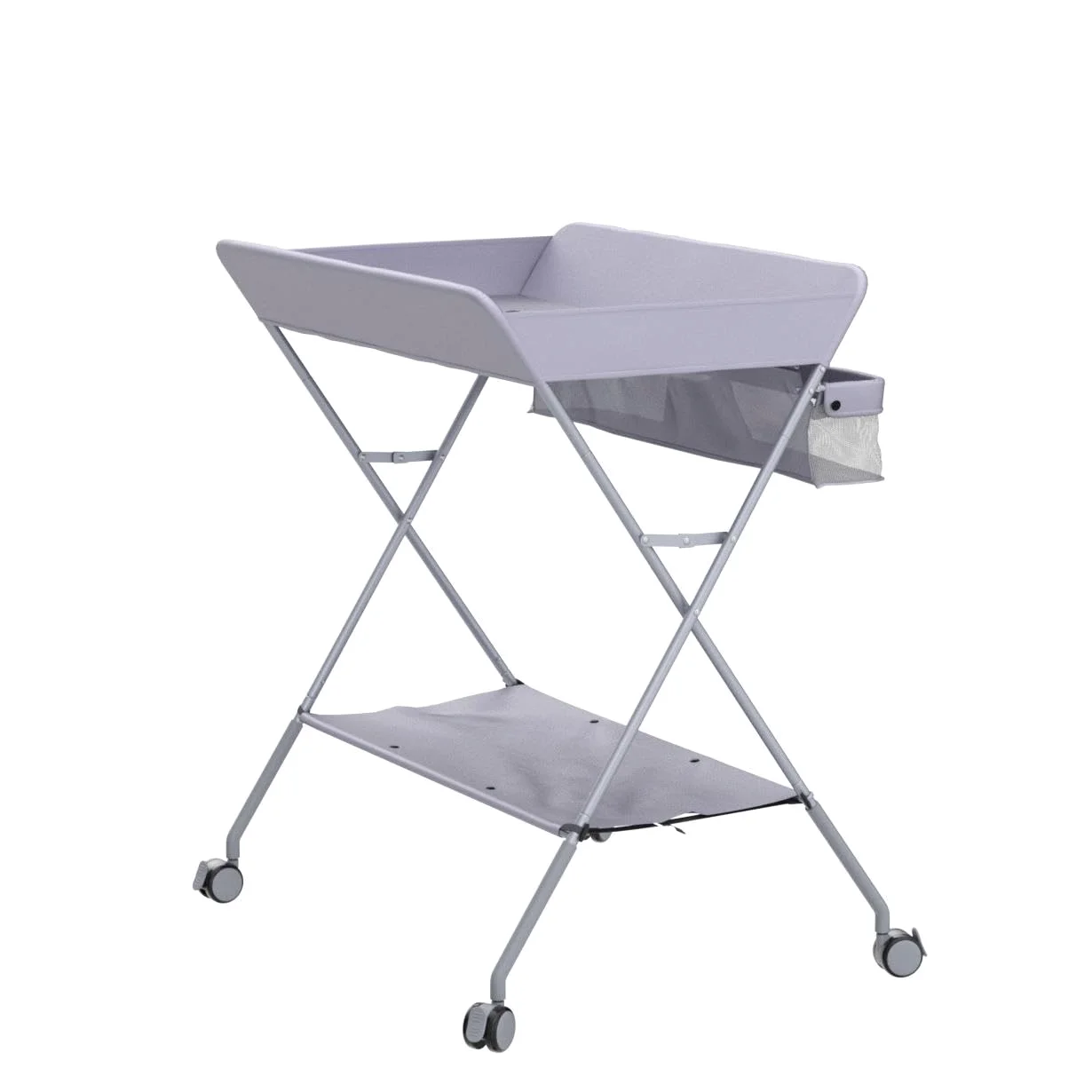
How a dedicated changing table feels in daily use
A dedicated changing table gives you a set space that exists for one job. It is there every time you need to lift a baby and handle a messy diaper. That predictability matters when you move quickly with a wriggly child in your arms. You know where you stand, where your hands go, where the wipes live, and where the clean clothes sit.
Our changing table has four working heights between 33.8 and 38.6 inches. That lets you adjust the surface so your back and shoulders do not carry all the strain. If you are taller, you can set the platform higher. If you are shorter or recovering from a birth that made bending harder, you bring it down. Over weeks of changes, that small choice shapes how heavy the work feels.
The footprint is 29.9 by 23.6 inches, so you claim a defined patch of floor in the room. You roll the table into that space on four lockable wheels, then stop it where you want it. Once the wheels are locked, the position stays put for as long as you need. When you want the floor back, you unlock and move it again. The frame is powder-coated steel and the deck is oxford fabric over a folding board, so the structure feels light in the hands and firm under the pad.
Two mesh side baskets and a lower shelf hold the bulky parts of your setup. Diapers, wipes, creams, covers, spare onesies, and a trash bag can all sit within your reach and outside the baby’s. The frame folds without unloading the shelf, so you can reclaim space if grandparents visit or a play mat needs the corner. You choose where the changing space lives each day, instead of building the whole nursery around a single heavy piece.
How a pad on a dresser fits into the room
A pad on a dresser turns furniture you already have into the place where changes happen. You keep the footprint of the room almost the same, since the dresser is there with or without diapers in your life. Once the changing years are over, the surface goes back to folded clothes, books, or a lamp. The dresser stays furniture that keeps serving the room.
Most chests of drawers sit between 30 and 36 inches tall. The height does not adjust, so your body has to match the piece instead of the other way round. If both adults who care for the baby have different builds, one of you may find the surface just right while the other bends more. Over time, that can shape how willing you feel to take the longer night shifts or the bigger cleanup jobs. A soft contoured pad on top can take the edge off for the child, but it does not change how far you lean.
Storage lives inside the dresser instead of beside or below it. Clean clothes and spare bedding sit one drawer pull away, not on open shelves. That can make the room feel calmer and less busy, especially in a bedroom that already holds a crib and a chair. It also means you might close drawers with one hand while steadying a baby with the other. Every handle you turn during a change is a small movement you think through.
There is no folding or rolling involved. The dresser stays where you first set it, and the changing pad becomes part of that top surface for a few years. If you need to reclaim the top quickly, you lift the pad away and slide it into a closet. The furniture goes back to looking like a regular adult piece, and the room shifts with your child.
Height, comfort, and how your body feels at 3 a.m.
Height is the part you feel in your lower back. You might not notice it in the first weeks, when the baby is tiny and you are full of adrenaline. It shows itself on the twentieth change of the day, when you have been up for hours and find yourself leaning further than you meant. Every inch between your hands and your hips changes that curve.
Our changing table gives you four working heights between 33.8 and 38.6 inches. At the top setting the platform is high enough that an older baby’s chest comes closer to your middle, not your knees. The reach feels shorter, so you can square your shoulders and keep more weight in your legs. If your partner is much taller or shorter, you can shift the frame between you with a simple adjustment before a new round of changes.
A dresser sits between 30 and 36 inches and does not move. If it happens to land at a sweet spot for your height, you have a sturdy surface that just works. If it sits too low or too high for you, that cannot change, so your stance must. You might step back a little and bend at the hips, or lean your ribs into the edge. Over a long stretch of nights, those small moves echo in your back and shoulders.
Comfort is not only about pain. It is also about how stable you feel while you wipe, fasten, and redress. On a surface that matches your height, you can keep your elbows close to your sides and your hands steady. On a surface that does not, your arms float higher or reach further, and the baby feels that wobble. That is the moment when a mid-change roll surprises you and your body has to catch up.
Storage, reach, and keeping hands on the baby
Storage around the changing space decides how far your hands travel. The American Academy of Pediatrics asks that supplies stay within your reach and out of your child’s. That simple rule shapes the whole layout of the table or dresser. Every item sits where you can grab it without turning your back or stepping away.
On our changing table, two mesh side baskets hold diapers, wipes, creams, and small items. The lower shelf keeps bulk packs, spare outfits, and towels close by. You can see everything at a glance through the mesh, so you do not dig for the last clean onesie while a mess spreads. Because the table folds without unloading the shelf, you can leave those supplies in place between uses, even if you move the frame into a corner.
A dresser uses drawers instead of open baskets. That keeps the room tidy and hides the clutter from view. It also adds one more action between you and the thing you need. You slide a drawer open, reach in, and find the right size diaper, all while a baby lies on the pad above. If the drawer sticks or the stack of clothes slips, your attention shifts for a moment away from the child.
Reach matters most when something unexpected happens. A blowout, a suddenly soaked vest, or a child who discovers rolling on the very day you feel tired. If wipes and clean clothes sit next to the changing surface, your hands can anchor the baby while you gather what you need. If they live across the room in a closet, you have to choose between lifting the child off mid-change or stepping away for a second. That choice feels different when the supplies sit at your fingertips.
Floor space, folding, and sharing a room with real life
Floor space is the part of the room you walk through every day. Cribs, chairs, hampers, and toys all want a share of that area. The way your changing setup claims space affects how freely you move, especially in a small nursery or a shared bedroom. You notice it when you pace with a fussy baby or carry a laundry basket through the door.
Our changing table has a footprint of 29.9 by 23.6 inches. It stands on four lockable wheels, which means you can roll it against a wall during the day and pull it out when you change. When you need to clear the floor completely, you fold the powder-coated steel frame and the oxford fabric deck over its board, without unloading the shelf. The whole unit then slides behind a door or into a closet. You trade fixed floor space for a movable tool.
A dresser works differently. The chest of drawers usually sits along a wall and stays there. The changing pad takes over the top surface but does not change the footprint at all. That can be a strong fit in a narrow room where there is no spare corner for a separate table. You still need space to stand in front of the drawers, and you might share that spot with someone getting dressed, but the furniture itself does not move around you.
Flexibility comes in how often your needs shift. If your home office shares space with the crib, you may like being able to roll the changing table aside before opening a laptop. If your bedroom already holds a sturdy dresser that you love, keeping the floor free by adding only a pad can feel kinder to the room. The choice is less about one object and more about how you picture walking across that floor at night, half asleep, with a baby in your arms.
Safety standards and what they cover on each setup
Baby changing products in the United States sit under the federal rule at 16 CFR part 1235, which takes in ASTM F2388. That standard defines a changing table as a freestanding structure meant to hold a child of up to 30 lb. It covers structural integrity, the barrier that stops a child rolling off, possible entrapment, and how the restraint system works. Contoured changing pads and add-on changing units also fall under this same rule, so the core ideas of safety travel with the product, not just the frame.
The American Academy of Pediatrics asks for a guardrail of two inches on all four sides of the changing surface. It also states that a child is never left alone on the table, even when strapped in. Supplies should be within the adult’s reach and out of the child’s. Those points apply whether you use a folding table with a pad or a pad set on a dresser. The surface, the barrier, and your hands all work together.
Our changing table is built as a freestanding structure a little over 14 lb in weight. The steel frame, fabric deck over its folding board, side baskets, and lower shelf come together as a single unit. The surface is designed for a child who has not yet passed 30 lb, which lines up with the definition in the standard. The frame provides the structure that holds the pad at a set height and keeps the space defined around the child.
A changing pad on a dresser depends on the dresser for its support. The pad itself still counts as a baby changing product under the same federal rule, so its contour and guardrails must fit that framework. The dresser below it remains regular furniture in the room. Your hands, your habits, and where you place the supplies matter as much as the product label. The standard sets the baseline, and your setup fills in the details.
What happens on the day your child passes thirty pounds
The standard for baby changing products sets its limit at a child of up to 30 lb. That gives you a rough idea of the stage when the table or pad has done its main job. Children reach that point at different ages, so the calendar on the wall matters less than the scale. The moment you notice your child moving past that size, the way you use the changing space naturally shifts.
With a dedicated changing table, the product’s life is tied closely to that window. Our table is defined as a freestanding structure for a child up to 30 lb, so its primary role ends there. After that, many families move changes to a bed, a floor mat, or another soft surface that feels safe at the new size. The frame, baskets, and shelf have done their work alongside you and can then be folded, stored, passed on, or repurposed in ways that suit your home.
A dresser with a pad sees a different arc. The pad still fits into the same standard and limit, yet the furniture under it does not age out. Once your child is too big or too active for changes on the top, you lift the pad away. The chest of drawers goes back to storing clothes without any sign of what used to sit above. That can feel efficient if you want fewer short-lived baby items in the house.
This moment also changes your routines. A toddler who has passed 30 lb often stands, helps with dressing, or moves with more intent. Your focus turns from holding them in place on a surface to working with them on the floor or in the bathroom. The decision you make today echoes into how easy that later shift feels, and how much space you have to adapt the room to a growing body and a new kind of care.
How to decide for your room and your body
These choices work best when you frame them around your own space and habits. The right setup is the one that fits how you live, not an ideal picture in a catalog. To sort through that, it can help to ask yourself a few clear questions and answer them honestly in the room where the baby will sleep.
- Stand where you expect to change most often and ask: how much floor space can I give up and still walk comfortably at night.
- Measure the dresser you already own and ask: does this height feel kind to my back if I lean here for a few minutes.
- Look at the corners and walls and ask: is there a spot where a 29.9 by 23.6 inch footprint on wheels could roll in and out without blocking doors.
- Open your storage and ask: do I prefer supplies hidden in drawers or visible in baskets I can reach without bending.
- Think about your future self and ask: will I want this dresser to keep serving the room after diapers, or am I content for a changing table to come and go with this stage.
- Picture picking up a child who is learning to roll and ask: where will my hands feel steadiest as I turn, wipe, and redress.
As you walk through those questions, the answer often becomes less abstract. You start to see where your body will stand, where your baby will lie, and where the wipes will live. That picture is the one you follow.
Whichever you choose, the strap and your hand are both part of using it.
Three pieces, six finishes
Every finish in the EGREE catalogue sits behind this button, with the price from our last update against each one.